Editorial Welcome

Deen Shariff Sharp, PhD, is the co-director of Terreform, Center for Advanced Urban Research, and a Post-Doctoral Fellow at the London School of Economics and Political Science in Geography and the Environment. He was previously a Fellow at the Aga Khan Program for Islamic Architecture at the Massachusetts Institute of Technology. He is the co-editor of Beyond the Square: Urbanism and the Arab Uprisings (Urban Research: 2016) and Open Gaza (Urban Research: 2020).

Ammar Azzouz is an architect and an Honorary Research Associate at the School of Geography and the Environment, University of Oxford. He is an analyst at Arup. He is a Collective Member at CITY academic journal. His research focus is on urban violence, destruction and reconstruction of contested cities.

Anne Bouhali, PhD in geography, is Associate Professor at University of Picardie, and researcher at Habiter le Monde laboratory, University of Picardie, and PRODIG laboratory, Paris 1 Sorbonne University. Her research work deals with urban and commercial dynamics and trade flows in Egypt, Algeria and recently in Morocco and Senegal.

Anwar Jaber is an architect and urban researcher with a PhD in Architecture from the University of Cambridge. She is interested in cities, their urban form and their socio-political conditions, focusing on the Middle East. She practiced as an urban planner in Jerusalem and supervised undergraduate courses in architecture at Cambridge.
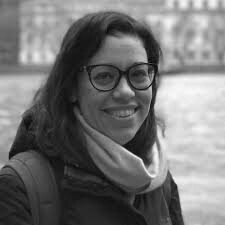
Aya Nassar is an Assistant Professor of Human Geography in Durham University. Her research focuses on postcoloniality, urban and political geography with a focus on questions of materiality, affect and politics of storytelling.

Faiq Mari is an architect working in the field of architectural research, education, and design, with a focus on architecture's potential as a tool for social and political investigation and action. He is currently a doctoral fellow at the Institute for the History and Theory of Architecture (gta) at ETH Zürich. Prior to joining the gta he taught at Birzeit University and Al Quds University in Palestine. Faiq holds a bachelor's degree in architectural engineering from Birzeit University and a master's degree in architecture history and theory from the University of Michigan, Ann Arbor, where he was a Fulbright scholar.
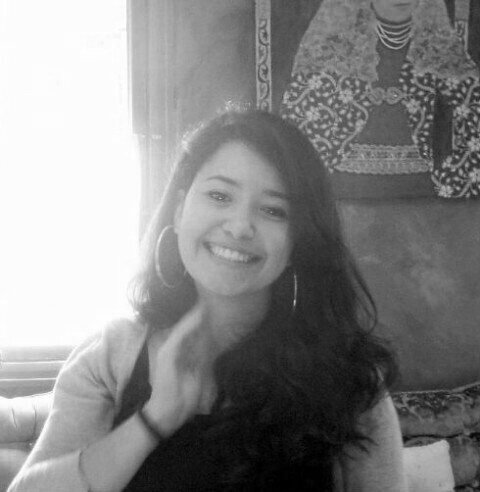
Lana Judeh is an architect who teaches at Birzeit University. She previously worked on Riwaq's rehabilitation projects of historic centres in Palestinian villages, and on producing a manual for the rehabilitation of the old city of Ramallah. She holds an MA in architecture, cultural Identity and globalisation from the University of Westminster, UK, and a BSc in architectural engineering from Birzeit University.

Leila Khaldi is a Tunisian Architect - Urban Planner and a consultant at UN-Habitat. She holds a PhD in Urban Planning from the University of Paris Nanterre. Her areas of interest revolve around social participation in urban planning as well as community-led projects within "slum upgrading" processes in the Arab Region, Africa and Latin America.

Omar is a geographer and FWO Research Fellow in the Department of Conflict and Development at Ghent University. Currently he is a Visiting Research Fellow in the Department of Politics and International Studies at the School of Oriental and African Studies, University of London. Previously he was a Marie Curie Fellow in the Department of Middle Eastern, South Asian, and African Studies at Columbia University. His work lies at the intersection of urban studies, settler colonialism, political economy and Middle East studies. Currently he serves in the international advisory boards of Antipode and ACME, the editorial board of Jadaliyya Cities, the steering committee of the International Critical Geography Group and the reading committee of Regards.

Majd Al-Shihabi is a systems design engineer, based in Beirut, applying the craft of systems thinking to as many fields as he can reach. He works with a wide range of academic and cultural institutions and archives in the region to build openness into their information systems. He is interested in knowledge production outside of traditional institutions, and knowledge dissemination to wider audiences. He is an urban planning graduate student at the American University of Beirut. His most recent project is Palestine Open Maps, a platform for open sourcing historical maps of Palestine.

Diala Lteif is a doctoral candidate in Planning at the University of Toronto. Her research focuses on urban struggle and displacement through a historical study of Quarantina, a neighborhood in Beirut, Lebanon. She also has over 6 years of graduate and undergraduate teaching experience, in addition to an ongoing freelance design practice with NGOs and private sector companies.

Dena Qaddumi is a PhD candidate in the Department of Architecture at the University of Cambridge. Her PhD research examines the materialization of revolution in the post-Arab Spring city of Tunis. Prior to starting her PhD, Dena worked in architecture, planning and higher education in New York, London, Palestine and Doha.

Deena Khalil is a development planner and urban researcher who is currently a lecturer and post-doctoral fellow at the School of Humanities and Social Sciences, American University in Cairo. She holds a PhD in Development Planning from University College London (UCL) and a M.A. in Economics of International Development from AUC. Prior to this, Deena was the Research and Advocacy Unit Manager at Takween Integrated Community Development, an urban development consultancy focusing on underserved communities and urban issues in Egypt.

Hashem Abushama is a doctoral candidate at the School of Geography and the Environment at the University of Oxford. His research examines the cultural manifestations of urban expansion in the cities of Haifa and Ramallah. He holds an MSc in Refugee and Forced Migration Studies from the University of Oxford and a BA from Earlham College.

Wesam is an architect and a doctoral researcher at the Centre for Natural Material Innovation at the University of Cambridge. As an architect and builder, Wesam capitalises on the role that design and technology can play in learning from and engaging with vernacular construction to respond to environmental challenges. Through design, making, and case studies in Cuba, Spain, and Syria, he examines technology, manufacturing, and craft training in tile-vaulting to facilitate locally resourced construction during economic hardship, emergency, and post-war reconstruction. Wesam leads IWlab, his cofounded practice in Damascus, Syria, in research and projects about informal construction in Damascus. Wesam is director of Urbegony and lecturer at Master program in Emergency and Resilience at the Venice school of architecture (IUAV). His research has been recognised with awards such as the Spanish Tile Award (2016-17) and the Morgan Sindall Prize (2016).

Nadi Abusaada is an architect, urbanist and a historian. He is currently an Aga Khan Postdoctoral Fellow at the Massachusetts Institute of Technology (MIT) in the United States. Nadi's PhD at the University of Cambridge examined the history of urban planning and urban governance in late Ottoman and Mandate Palestine. Nadi is also the co-founder of Arab Urbanism, a global network dedicated to historical and contemporary urban issues in the Arab region. His writings have been featured in a number of international publications including The Architectural Review, The International Journal of Islamic Architecture, and the Jerusalem Quarterly among others.
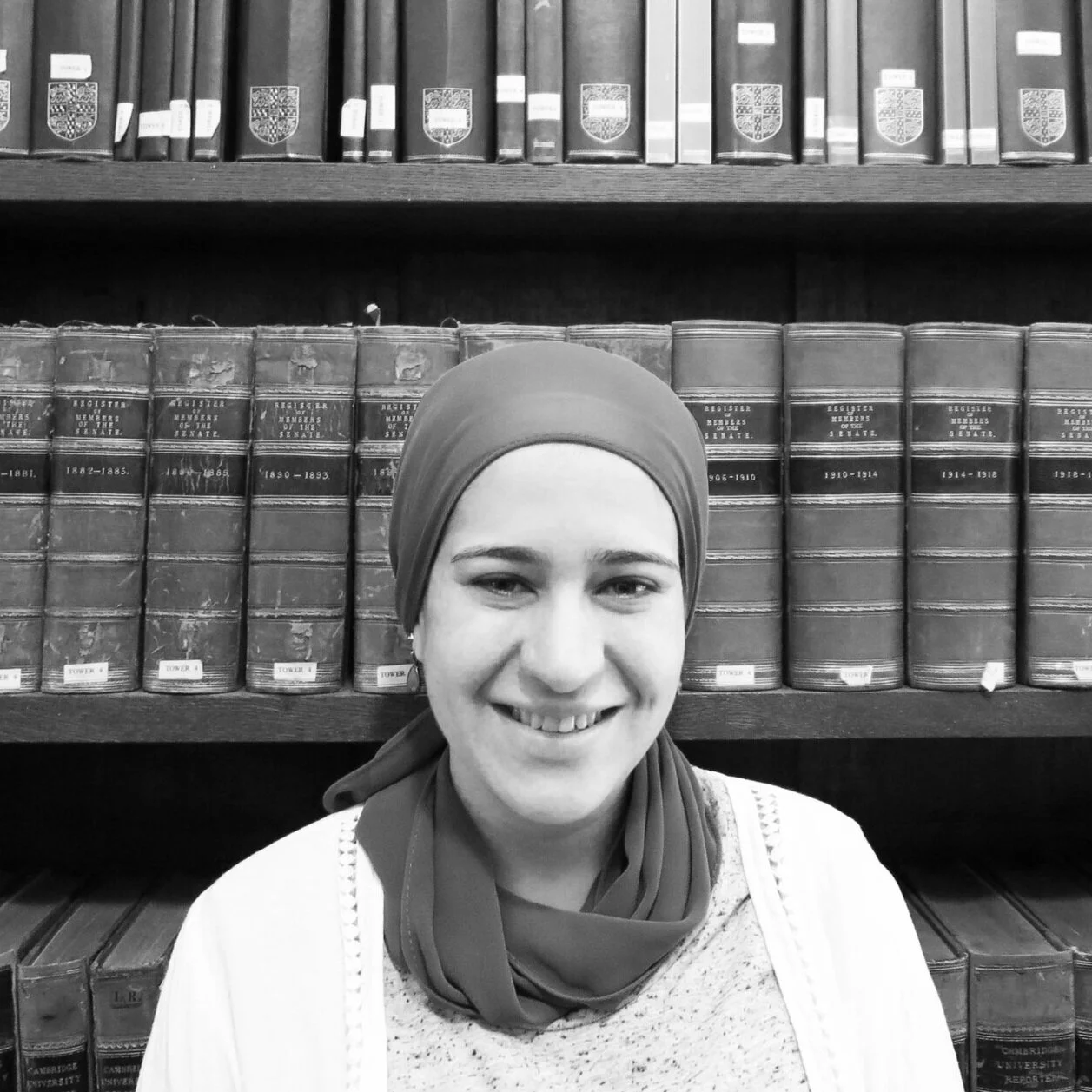
Noura Wahby is an ESRC Postdoctoral Fellow at the Department of Geography at the University of Cambridge. Her doctoral research at Cambridge’s Centre of Development Studies focused on the political economy of urban development and urban waterscapes in Cairo, Egypt. She previously worked at the Cambridge Centre of Smart Infrastructure looking at citizen engagement, digital technologies, and local infrastructure in the UK. She has also worked in the Middle East in a diversity of international development projects, and her research interests include the urban commons, informality, water, and political geography.
Editorial Letter
Urbanisation is one of the central forces shaping social life in the Arab region. As cities grow, disappear, and organise new realities, critical debate on urban policies, histories and everyday life is increasingly crucial. More than giving answers, our primary concern is to raise questions regarding how urban realities are made, remade, and unmade. Who are the powerful agents in these processes and how is their power contested? Can we speak of an ‘Arab’ urbanism?
The magazine is a project that has been a year in the making. It developed out of our desire to begin a conversation on how and why our cities are designed, built, and destroyed. We envision it as a platform for critical engagement with voices based across the region in diverse spaces that subvert, create and renew perceptions of urban history, planning, architecture, geography and resistance.
As academia and urban practices grow further apart, we thought of ways to bring together researchers, practitioners and residents to critically debate changes happening in our cities. As an open access platform, the magazine opens a space for the expression of new and critical ideas. These ideas guide our understanding of the past and present of our urban sphere, and draw imaginaries for its future. Having the space to speak, construct and contest is crucial to develop new pathways to understand urban realities as they are negotiated on a daily basis.
In these early days, our main objective has been to build a collective that crosscuts discipline, context, and practice. Having received over 80 contributions to our call for submissions, ranging from short interventions and academic research to visual statements and short films; the need for dialogue is clear and visible. The result is the magazine’s first issue, a collaboration between authors and editors enriched by their diversity of languages, geographical locations and disciplines. These first contributions are the experimental ground for an open source of knowledge production in the region.
As Arab Urbanism continues to grow with its contributors and members, we envision a way forward that amplifies the voice of underrepresented urban communities in the region (including non-Arab groups and migrant communities), cultivates cross regional conversations on urbanisation, and highlights critical perspectives on how we understand, study and live in our cities.
Editors-in-Chief
Editors’ Impressions